Is Renovating Your San Francisco Home Before Selling Worth It?

Selling a home in San Francisco is a significant financial decision. Before putting a property on the market, many homeowners face an important question: Should I sell my home as-is, or should I renovate it first?
There is no single answer for every property. A renovation can improve a home's presentation, functionality, and buyer appeal, but the right strategy depends on the home's current condition, location, architecture, target buyer, and potential return. The goal should not be to renovate everything simply because a property is going on the market. The goal should be to identify the improvements that make the most sense for that particular home.
San Francisco remains a highly competitive residential market. Redfin reported a median home sale price of approximately $1.7 million for the three months ending May 2026, with homes selling in around 14 days. That environment makes presentation and positioning important, especially when buyers can compare multiple properties quickly.
For homeowners considering a sale, the better question is not simply “How much will renovation cost?” It is “What improvements can help this property reach its full potential?”
Why San Francisco Home Renovation Requires a Strategic Approach
San Francisco homes are different from properties in many other markets. The city has a diverse collection of Victorian, Edwardian, mid-century, modern, and contemporary residences. Many properties also have compact footprints, multi-level layouts, garages, unusual floor plans, and distinctive architectural details.
Because of this variety, a renovation strategy that works for one home may not make sense for another.
A successful renovation should respond to the property's existing strengths and weaknesses. It should improve the way the home looks and functions without removing the qualities that make the property distinctive.
For example, a dated kitchen may benefit from a complete redesign, while a historic façade may require a more careful approach. A narrow floor plan may benefit from improved circulation and storage rather than simply adding expensive finishes.
This is where strategic planning becomes more valuable than simply selecting attractive materials.
The San Francisco Buyer Is Looking for More Than a Fresh Coat of Paint
A fresh coat of paint can certainly improve a home's appearance, but today's buyers often evaluate the entire living experience.
They notice how the property feels when they arrive. They look at the condition of the exterior, the entryway, kitchen, bathrooms, living areas, bedrooms, storage, garage, and outdoor spaces. They also consider whether the property feels ready for modern life.
A home that looks cohesive and well maintained can create confidence. A home with visible deferred maintenance, outdated finishes, or an awkward layout can create questions about what else may need attention.
That does not mean every home needs a luxury renovation. It means homeowners should understand which issues are most likely to influence buyer perception.
Start With the Exterior and First Impression
The exterior is often the first part of a property a buyer experiences.
Curb appeal can influence the initial impression created by the home. Landscaping, exterior finishes, windows, doors, lighting, pathways, fencing, and the overall condition of the façade all contribute to how the property is perceived.
In San Francisco, exterior improvements can be particularly important because properties often sit close together and have distinctive street-facing architecture.
A thoughtful exterior renovation can modernize a property while maintaining its architectural character. The objective is not to make every home look the same. The objective is to make the property look cared for, intentional, and attractive.
Depending on the property, improvements might include updated exterior finishes, improved entry features, landscaping, lighting, garage doors, or other elements that strengthen the overall presentation.
Focus on the Kitchen
The kitchen is one of the most visible spaces in many homes.
A dated kitchen can make an otherwise attractive property feel older. An updated kitchen can create a more contemporary impression and improve everyday functionality.
However, homeowners should avoid assuming that the most expensive kitchen renovation is automatically the best investment.
A strategic kitchen renovation might focus on:
- Improving the overall layout
- Updating cabinetry
- Replacing outdated countertops
- Improving lighting
- Modernizing fixtures
- Adding practical storage
- Creating better connections between cooking and living areas
- Selecting finishes that complement the rest of the home
The strongest result usually comes from creating a kitchen that feels appropriate for the property rather than designing a space that looks disconnected from the home's architecture.
Don't Ignore the Bathrooms
Bathrooms are another area where buyers quickly notice condition and quality.
An outdated bathroom can make a property feel less move-in ready. Improvements can range from replacing fixtures and finishes to redesigning the entire space.
Potential upgrades include modern vanities, improved lighting, updated tile, better storage, contemporary fixtures, and more functional shower or bathing areas.
The key is consistency. If the kitchen has been beautifully renovated while the bathrooms remain significantly outdated, the property can feel unfinished.
A coordinated renovation creates a stronger overall impression.
Think Carefully About the Garage
In San Francisco, a garage can contribute significant functional value to a property.
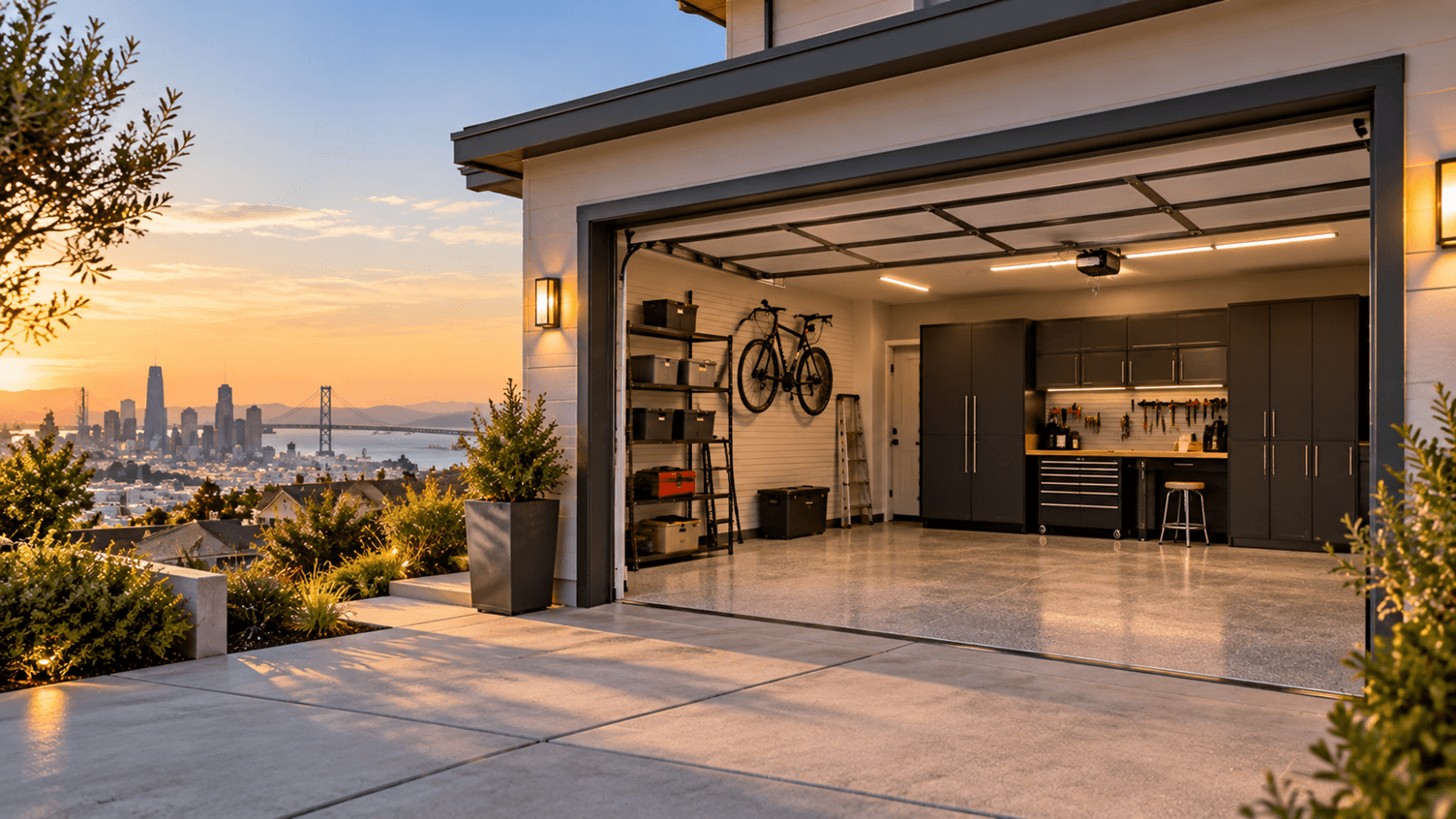
It may provide parking, storage, access, utility space, or additional potential depending on the property and applicable regulations. A garage that looks neglected can reduce the overall impression of the home, while a clean, functional, and well-designed garage can complement the rest of the property.
Homeowners should evaluate the garage as part of the property's complete presentation rather than treating it as a separate space.
Possible improvements may include:
- Updating the garage door
- Improving lighting
- Cleaning and organizing the space
- Improving storage
- Addressing visible maintenance issues
- Improving finishes
- Evaluating whether additional permitted uses may be appropriate
Any conversion, addition, or major alteration requires careful review of applicable planning and building requirements. San Francisco Planning advises homeowners to determine zoning and permitting requirements before renovating, expanding, or adding dwelling space.
Improve Functionality, Not Just Appearance
One of the most important principles in residential renovation is to improve how the home works.
A beautiful room is useful, but a beautiful room that is also comfortable, efficient, and functional can create a stronger living experience.
Consider the way people move through the property.
Are rooms connected logically? Is there enough storage? Does the lighting work throughout the day? Are there awkward spaces that could be used more effectively? Does the floor plan support modern living?
These questions can reveal opportunities that are not immediately obvious.
Space optimization can involve relatively focused changes, such as improved storage, lighting, room connections, or furniture layouts. In other cases, a more extensive redesign may make sense.
The right answer depends on the property.
Preserve San Francisco's Architectural Character
Renovation does not have to mean removing the personality of an older home.
San Francisco is known for its architectural heritage, and many residential properties contain details that contribute to the character of their neighborhoods.
A thoughtful renovation can preserve important architectural elements while introducing contemporary functionality.
For example, an older façade might retain its distinctive proportions while receiving carefully selected exterior improvements. Interior spaces can maintain original character while incorporating modern kitchens, bathrooms, lighting, technology, and finishes.
For properties with historic or significant characteristics, additional planning and review may apply. San Francisco Planning notes that certain major alterations to significant or contributory buildings can require Historic Preservation Commission review.
That makes early evaluation especially important before beginning major work.
Consider the Cost Before Starting
Renovation costs can vary substantially based on the scope of work, property condition, materials, structural requirements, permits, and project complexity.
San Francisco's Department of Building Inspection publishes residential remodel cost schedules that illustrate how project costs can differ depending on the type and extent of work.
For that reason, homeowners should establish a clear renovation strategy before committing to construction.
Ask:
- What problems need to be addressed?
- Which improvements are most visible?
- Which improvements improve functionality?
- Which upgrades align with local buyer expectations?
- What work is required for safety or compliance?
- Which improvements are optional?
- How does the proposed investment compare with the property's potential?
A renovation budget should support a specific objective. Spending more does not automatically produce a better return.
Compare the Property With Competing Homes
One of the best ways to determine whether renovation makes sense is to understand the competition.
Look at recently sold properties in the same neighborhood with similar characteristics. Compare condition, size, layout, finishes, exterior appearance, garage or parking, outdoor space, and overall presentation.
The goal is not to copy another property.
Instead, identify where your home falls behind and where it already has an advantage.
For example, if competing homes have modern kitchens and your kitchen is significantly outdated, that may be a meaningful area to address. If your property already has an attractive kitchen but has a neglected exterior, the exterior may deserve more attention.
This approach helps homeowners prioritize.
Avoid Over-Improving the Property
Over-improvement is another important consideration.
A homeowner may love a particular luxury finish, but that does not necessarily mean the improvement will provide an equivalent return when the property sells.
The renovation should make sense for the home's location, size, architecture, and likely buyer.
A $100,000 improvement does not automatically create $100,000 of additional market value. Market response depends on numerous factors, including comparable properties, buyer demand, project quality, and the overall condition of the home.
The objective should therefore be strategic value creation, not simply a larger renovation budget.
Think About the Target Buyer
Every property should have a clear target audience.
A modern condominium may appeal to a different buyer than a traditional single-family home. A property near major employment centers may attract different priorities than a larger residence designed for a family.
Understanding the likely buyer can influence design decisions.
For example, buyers may value:
- Flexible living spaces
- Modern kitchens
- Updated bathrooms
- Home office areas
- Storage
- Parking or garage functionality
- Outdoor living
- Energy-conscious improvements
- Smart-home features
The renovation should respond to genuine buyer needs rather than temporary design trends.
What Makes a Home Feel Move-In Ready?
Move-in ready does not necessarily mean completely new.
It means the buyer can walk into the property and understand how they would live there without immediately seeing a long list of major projects.
A move-in-ready home typically feels:
Clean. Functional. Cohesive. Well maintained. Modern. Comfortable.
That feeling comes from many details working together.
The exterior should support the interior. The kitchen should feel consistent with the bathrooms. Lighting should complement the finishes. Rooms should flow naturally into one another.
This is why a holistic renovation strategy can be more effective than a collection of unrelated upgrades.
How American Pacific Properties Corp. Approaches Property Transformation
At American Pacific Properties Corp. (APPC), our focus is not general construction. Our work centers on residential property acquisition, renovation, transformation, and resale.
We look at existing properties and evaluate what they could become.
That perspective changes the renovation process.
Instead of asking only what needs to be repaired, we consider how the property can be improved as a complete residential environment.
Our approach can involve:
Property Evaluation
We begin by understanding the property's location, condition, architecture, layout, and potential.
Strategic Planning
We identify improvements that can strengthen functionality, design, presentation, and overall market appeal.
Design and Renovation
We transform existing spaces through carefully considered improvements, quality materials, modern finishes, and thoughtful design.
Property Transformation
The final objective is a cohesive residence that feels modern, functional, and appropriate for its market.
This approach allows APPC to focus on the bigger picture: how an existing property can become a better home and a stronger real estate asset.
Why Timing Matters Before Selling
Homeowners often wait until they have decided to sell before thinking about improvements.
That can create unnecessary pressure.
Planning early gives homeowners more time to evaluate the property, establish priorities, complete appropriate work, and prepare the home for market.
Major renovations can also involve planning and permitting considerations. San Francisco Planning states that homeowners planning to build, demolish, renovate, expand, or add dwelling units should first determine the applicable planning and building requirements.
Starting with a clear plan can reduce surprises and help align the renovation with the intended selling timeline.
Should You Renovate Before Selling?
The answer depends on the property.
If a home is already updated, well maintained, and competitive with nearby properties, a major renovation may not make sense.
If the property has an outdated kitchen, poor curb appeal, inefficient spaces, neglected bathrooms, or other visible issues, strategic improvements may help it compete more effectively.
The important thing is to avoid treating renovation as an automatic requirement.
Instead, evaluate the property and determine where the greatest opportunities exist.
The Goal Is Not to Renovate Everything
The best pre-sale renovation strategy is rarely about changing every room.
It is about identifying the improvements that create the strongest overall result.
Sometimes that means a focused renovation of the kitchen and bathrooms. Sometimes it means improving the exterior and garage. Sometimes it requires a broader transformation of the property.
Every home is different.
The right renovation should respect the property's architecture, respond to the local market, improve the living experience, and support the property's long-term value.
Final Thoughts: Make the Right Improvements, Not Just More Improvements
So, is renovating your San Francisco home before selling worth it?
It can be—when the renovation is strategic.
San Francisco's competitive housing market gives homeowners a strong reason to think carefully about how their property will be presented. Current market data shows substantial demand and high property values, but those conditions do not eliminate the need for thoughtful preparation.
A successful renovation starts with understanding the property.
What does it already do well? What holds it back? What will buyers notice first? Which improvements will make the home more functional? Which changes will create a stronger, more cohesive presentation?
Those questions are more important than simply choosing the most expensive finishes.
At American Pacific Properties Corp., we believe existing homes often have more potential than first impressions suggest. Through strategic renovation, thoughtful design, and careful attention to the property's unique characteristics, that potential can become a modern and compelling residential environment.
If you are considering selling a San Francisco property, start by looking beyond the current condition of the home.
Look at what the property could become.
Let's Talk About Your Property
Contact American Pacific Properties Corp. today to explore how strategic improvements can help unlock your property's potential.
📍 San Francisco, CA