How to Modernize an Older Home Without Losing Its Character
Older homes often have something that newer properties cannot easily replicate: architectural details, distinctive layouts, craftsmanship, and a sense of history. However, as lifestyles change, these homes may need thoughtful improvements to provide better functionality, comfort, and everyday usability.
Modernizing an older home is not simply about replacing traditional features with contemporary designs. It is about understanding what makes the property special and identifying improvements that allow it to work better for modern living.
In San Francisco, where residential properties feature a wide range of architectural styles and historic details, this balance can be particularly important. Homeowners may want brighter interiors, more practical layouts, updated kitchens, improved storage, and modern building systems without losing the character that makes their homes distinctive.
At American Pacific Properties Corp. (APPC), our focus is on residential property acquisition, renovation, and transformation. A thoughtful approach to property improvement considers both the existing home's character and its potential for better functionality, quality, and overall appeal.
In this guide, we explore how older homes can be modernized while preserving the architectural features and design details that make them unique.
Why Modernize an Older Home?
Older homes may have appealing architectural details but layouts, finishes, or systems that no longer meet current needs.
A renovation provides an opportunity to address these challenges while respecting the original design.
Depending on the property's condition, modernization may help homeowners:
- Improve the functionality of existing rooms.
- Create brighter, more comfortable living spaces.
- Update kitchens and bathrooms.
- Improve storage and circulation.
- Address maintenance and building-condition issues.
- Integrate modern lighting and building systems.
- Improve the home's overall presentation and buyer appeal.
However, not every older property requires a comprehensive renovation. Some homes may benefit from selective improvements, while others need more extensive work.
The right strategy begins with evaluating the existing property and identifying which changes will deliver meaningful practical benefits.
1. Identify the Architectural Features Worth Preserving
Before planning a modern renovation, determine which features give the home its distinctive identity.
Depending on the property's age and architectural style, these details may include original woodwork, decorative trim, built-in cabinetry, hardwood floors, traditional windows, ceiling details, fireplaces, or distinctive exterior features.
Preserving these elements can help maintain the home's visual character while allowing other areas to be updated.
Evaluate Original Details Carefully
Not every original feature will necessarily be in good condition. Some may need repair, restoration, or professional assessment before they can be retained.
Begin by identifying which features are structurally sound, which require maintenance, and which may need replacement because of deterioration or safety concerns.
Where possible, repairing a distinctive feature may be preferable to removing it without considering alternatives.
Balance Preservation With Practical Needs
Preserving character does not mean that every part of an older home must remain unchanged.
A property may retain its original trim, doors, or flooring while incorporating updated lighting, contemporary furnishings, and improved room functionality.
The goal is to create a cohesive result in which traditional architectural details and modern improvements complement one another.
For more information about APPC's residential property philosophy, visit our About page.
2. Improve the Layout Without Losing the Home's Identity
The layout of an older home can influence how comfortably it supports everyday life.
Some properties have smaller individual rooms, limited storage, narrow circulation areas, or kitchens that feel disconnected from other living spaces. These conditions may make the home less practical for contemporary households.
Modernization provides an opportunity to reconsider how existing rooms are used.
Make Existing Rooms More Functional
Before considering major structural changes, evaluate whether the current layout can be improved through furniture placement, better storage, lighting, or more efficient use of available space.
For example, a poorly organized room may become more functional with built-in storage and a clearer circulation path. A compact kitchen may benefit from improved cabinetry and a more practical work area.
These improvements can make a noticeable difference without requiring extensive alterations.
Consider Open-Plan Living Carefully
Open-plan layouts can improve visual connection between spaces, but removing walls is not always the best solution.
Walls may provide structural support, contain building systems, or contribute to the home's original room arrangement. Removing them can introduce engineering, permitting, and cost considerations.
Before making substantial changes, have the existing structure evaluated by qualified professionals.
In some homes, improving doorways, sightlines, or connections between rooms may achieve the desired result while preserving more of the original layout.
3. Modernize the Kitchen While Respecting Its Surroundings
The kitchen is often an important part of an older home's renovation because it combines everyday functionality with visual impact.
An outdated kitchen may have inefficient storage, worn surfaces, inadequate lighting, or an arrangement that makes food preparation difficult.
Modernization can address these issues without making the kitchen feel disconnected from the rest of the home.
Focus on Functionality First
Evaluate the placement of appliances, work surfaces, cabinets, and storage. The objective is to create a practical arrangement that supports cooking, cleaning, and everyday use.
Depending on the kitchen, useful improvements may include:
- More effective cabinet storage.
- Updated countertops and finishes.
- Improved task and ambient lighting.
- Better appliance placement.
- More practical work surfaces.
- Durable materials that are easy to maintain.
Choose a Design That Complements the Home
A modern kitchen does not have to look entirely different from the rest of the property.
Cabinet colors, hardware, flooring, and finishes can be selected to complement the home's architectural style.
For example, a contemporary kitchen with restrained finishes may work well alongside traditional woodwork and original flooring. The result can feel updated without erasing the home's personality.
The best design decisions respond to the property rather than following a trend without considering its long-term suitability.
4. Update Bathrooms for Comfort and Everyday Use
Bathrooms in older homes may need improvements to fixtures, ventilation, lighting, storage, and surface materials.
A renovation can make the space more comfortable and easier to maintain while addressing existing maintenance concerns.
Prioritize Essential Repairs
Before selecting new finishes, evaluate plumbing, visible moisture issues, ventilation, and the condition of the existing surfaces.
Water-related problems should be addressed before installing new materials. Where needed, qualified professionals should assess plumbing, waterproofing, and other building conditions.
Select Practical, Timeless Finishes
Modern fixtures and well-chosen materials can improve the bathroom's appearance without requiring an overly elaborate design.
Consider durable surfaces, adequate storage, suitable lighting, and fixtures that are appropriate for the room's size.
A timeless design approach can also help the renovated bathroom remain visually consistent with the rest of the home.
5. Improve Natural Light and Interior Lighting
Lighting can have a significant influence on how an older home feels and functions.
Some traditional layouts have darker hallways, limited natural light in certain rooms, or outdated fixtures that do not provide adequate illumination.
A thoughtful lighting plan can help address these limitations.
Make Better Use of Existing Windows
Keep existing windows in good condition where practical and consider how furniture, window treatments, and room layouts affect the amount of daylight entering the home.
If window replacement or enlargement is being considered, evaluate the building's condition, energy performance, architectural character, and applicable requirements.
Exterior alterations may require additional review, particularly for properties with historic or other special design considerations.
Layer Interior Lighting
A well-planned lighting scheme may combine general lighting, task lighting, and accent lighting.
General lighting illuminates the room, task lighting supports specific activities, and accent lighting can highlight architectural details or artwork.
The objective is to improve visibility and comfort while complementing the home's existing features.
6. Improve Storage and Make Better Use of Space
Limited storage can make an older home feel cluttered even when the overall floor area is sufficient.
Improving storage is often an effective way to enhance functionality without substantially changing the property's layout.
Consider Built-In Storage
Depending on the room, built-in cabinetry, shelving, or storage integrated into unused areas may provide useful additional capacity.
Solutions should be designed around the home's dimensions and existing architectural features.
In some properties, restoring original built-ins may be more appropriate than replacing them with unrelated contemporary cabinetry.
Evaluate Underused Areas
Hallways, alcoves, and other overlooked spaces may offer opportunities for better organization.
However, any proposed changes should preserve adequate circulation and comply with relevant safety requirements.
For homeowners considering broader improvements, our APPC Services page provides more information about the company's focus on residential property improvements and transformation.
7. Address Essential Building Systems and Maintenance
Modernization should not focus exclusively on visible design features.
Older homes may have aging plumbing, electrical systems, insulation, roofing, drainage, or other components that need attention. These conditions should be evaluated alongside aesthetic improvements.
Assess the Condition of Major Systems
The appropriate assessment depends on the property's age, history, visible condition, and proposed renovation scope.
Potential areas of review include:
- Electrical safety and system capacity.
- Plumbing condition and visible leaks.
- Roof condition and water intrusion.
- Insulation and energy performance.
- Heating and ventilation.
- Windows, doors, and weather protection.
- Drainage and moisture management.
Qualified professionals can help determine which repairs or upgrades are necessary.
Plan the Work in the Right Order
Where substantial work is needed, it is generally sensible to address critical building issues before completing decorative finishes.
For example, resolving a leak before installing new flooring can help avoid unnecessary rework.
Coordinating repairs with planned improvements may also reduce disruption and help establish a more realistic budget.
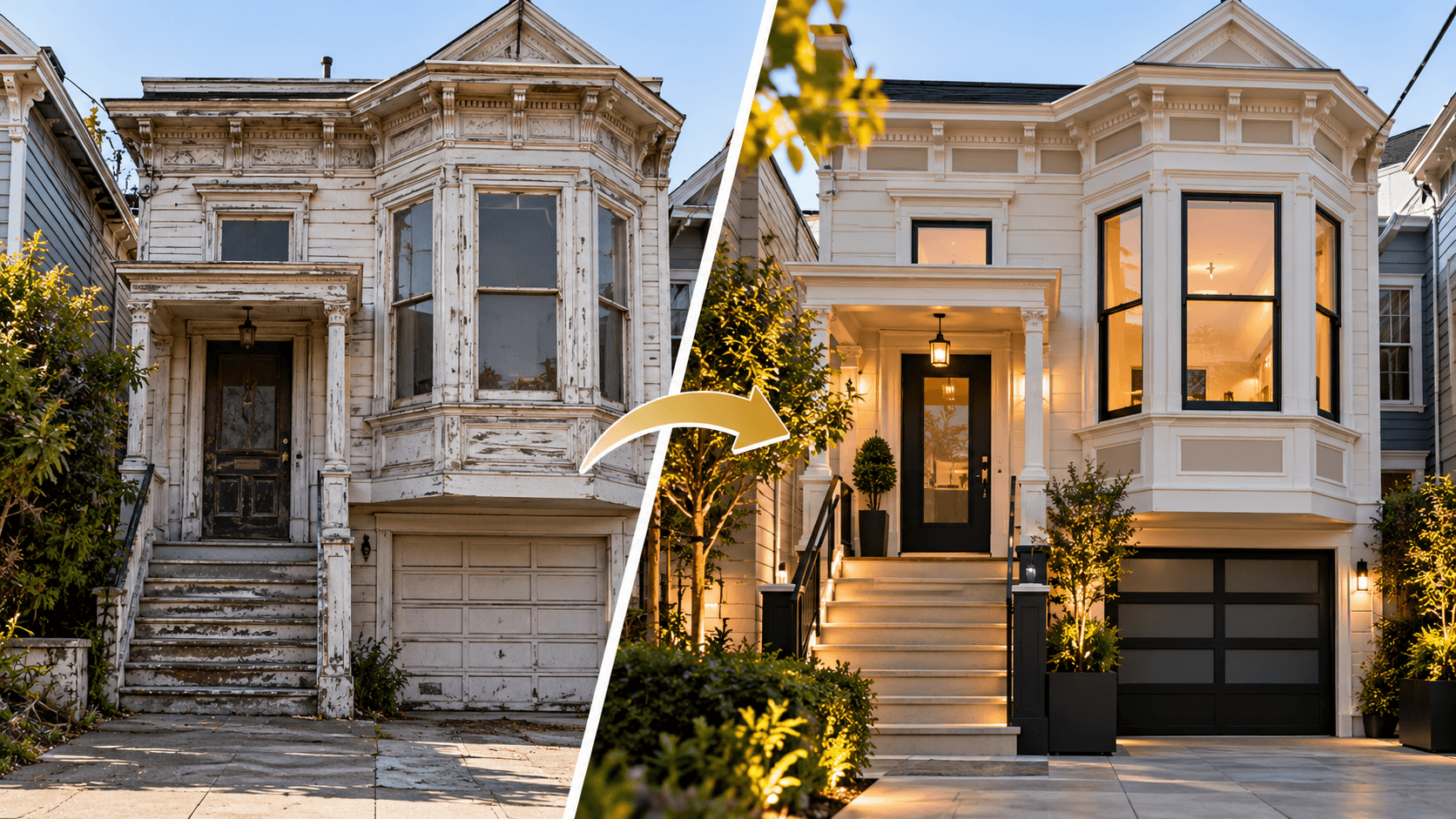
8. Modernize the Exterior While Preserving Architectural Character
The exterior plays an important role in how a home is perceived. It can also provide clues about the property's maintenance and overall condition.
Updating an older home's exterior requires a balance between improving appearance and respecting its architectural style.
Preserve Distinctive Exterior Details
Depending on the property, distinctive features may include traditional trim, entry doors, original siding, window proportions, or decorative elements.
Where practical, repairing and maintaining these features can preserve the home's character.
Before making major exterior changes, evaluate whether the property is subject to historic preservation rules, design review, or other local requirements.
Improve Condition and Consistency
Exterior improvements may include appropriate paintwork, repairs to damaged materials, improved entry lighting, and attention to landscaping or the property's approach.
The aim is to make the home look cared for and visually cohesive rather than introduce design changes that conflict with its original style.
For properties being prepared for resale, exterior condition and presentation should be considered alongside interior improvements.
9. Choose Energy-Efficient Improvements Where Appropriate
Modernizing an older home may provide opportunities to improve energy performance and everyday comfort.
The most appropriate measures depend on the existing building, climate, construction methods, budget, and applicable regulations.
Potential considerations include:
- Addressing air leaks where appropriate.
- Evaluating insulation.
- Maintaining or improving window performance.
- Installing suitable lighting.
- Assessing heating and ventilation systems.
- Choosing efficient appliances during planned upgrades.
However, energy improvements should be selected carefully. Certain changes can affect moisture management, ventilation, or original materials if they are not appropriate for the building.
For older properties, qualified advice can help determine which measures are suitable and how they should be implemented.
10. Understand Permits and Local Requirements Before Renovating
Renovation requirements depend on the work being proposed, the property's condition, and applicable local regulations.
Cosmetic updates may have different requirements from projects involving structural changes, plumbing, electrical systems, changes to windows, or modifications to the exterior.
Properties with historic designations or other planning restrictions may also require additional review.
Before beginning a renovation, homeowners should determine which permits and approvals apply to the intended work.
For projects in San Francisco, consult the San Francisco Department of Building Inspection for current building permit information.
Planning for these requirements early can help reduce uncertainty, improve coordination, and prevent avoidable delays.
11. Set a Realistic Budget and Prioritize Improvements
The cost of modernizing an older home depends on the property's size, condition, materials, labor, and scope of work.
A project focused on paint, lighting, and selected finishes will have different requirements from one involving structural changes, kitchen and bathroom renovations, or major building-system upgrades.
A useful starting point is to separate the project into priorities.
Obtain estimates based on the actual property and proposed scope rather than relying only on general cost guides.
It is also important to avoid assuming that every upgrade will produce a matching increase in resale value. The outcome depends on the local market, comparable properties, buyer expectations, renovation quality, and total expenditure.
A well-prioritized plan focuses on improvements that make the home more functional and appropriate for its intended use
12. Consider the Home's Future Use and Market Appeal
The right renovation strategy depends partly on whether the property is intended for long-term occupancy, future resale, or another residential objective.
Homeowners planning to remain in the property may prioritize comfort, storage, energy performance, and personal preferences.
A property being prepared for resale may require a different balance, with greater attention to maintenance, broad buyer appeal, cohesive finishes, and the overall presentation.
In either case, improvements should respond to the home's condition and the needs of its likely occupants.
Overly personalized features or expensive upgrades may not always provide the best return for a resale-focused project. Conversely, neglecting essential repairs can undermine the benefits of otherwise attractive design changes.
A property-specific strategy helps ensure that the renovation remains aligned with its broader objectives.
Common Mistakes to Avoid When Modernizing an Older Home
Several mistakes can make an older-home renovation more expensive or less successful than intended.
Removing original features without evaluating their value
Distinctive architectural details can contribute to a home's identity. Consider whether they can be repaired or incorporated into the updated design before removing them.
Following trends without considering the property
A design that works in a newly built home may not complement an older property's proportions, materials, or architectural style.
Prioritizing appearance over building condition
Decorative finishes should not take priority over important structural, moisture, electrical, or plumbing concerns.
Making layout changes without proper assessment
Removing walls or changing room configurations can affect structural support, building systems, and regulatory requirements.
Underestimating the budget
Older properties may contain concealed conditions that become apparent only after work begins. Appropriate assessment and contingency planning are important.
Ignoring permits and local rules
Verify applicable requirements before starting work, especially when the project involves structural changes or exterior alterations.
Avoiding these mistakes helps homeowners make more informed decisions and maintain a clear direction throughout the renovation.
How APPC Approaches Residential Property Transformation
American Pacific Properties Corp. (APPC) focuses on residential property acquisition, renovation, and resale, with an emphasis on improving existing properties.
Our approach considers how design, functionality, condition, and overall presentation contribute to a property's potential. Modernization is not simply about making an older home look contemporary. It is about identifying appropriate improvements that help the property work better while respecting its defining characteristics.
Depending on the home, this may involve updating interior spaces, improving layouts, addressing maintenance issues, or coordinating design choices across the property.
Each project requires an individual assessment. The appropriate scope depends on the property's existing condition, architectural features, renovation objectives, and intended market.
Learn more about our approach through the APPC Services page or explore the company's background on the About APPC page.
Final Thoughts: Create a Modern Home Without Erasing Its Past
Modernizing an older home is an opportunity to bring together architectural character and contemporary functionality.
The most successful approach begins by identifying the features worth preserving, evaluating the property's condition, and prioritizing improvements that support everyday comfort and long-term usability.
From kitchen and bathroom updates to better lighting, storage, and essential building repairs, each decision should contribute to a cohesive renovation plan.
For older homes in San Francisco, careful consideration of architectural character and local requirements is especially important. A thoughtful design can help preserve the home's identity while making it more suitable for modern living.
Ultimately, the goal is not to erase the home's past. It is to build on its existing qualities and create a more functional, well-maintained, and appealing property.
Ready to Explore Your Property's Potential?
American Pacific Properties Corp. (APPC) focuses on residential property acquisition, renovation, and transformation in San Francisco.
American Pacific Properties Corp. (APPC)
San Francisco, California
Phone: 415-579-7777 | 415-271-8828
Website: www.appc.com
Explore our Services to learn more about our residential property focus.